Interview with Yves-Louis Dorsemaine
by Houda Bakkali
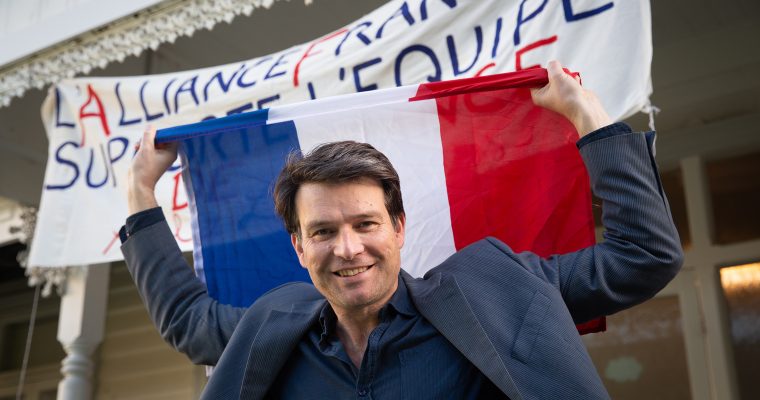
Interview by Houda Bakkali
On the occasion of the Month of Francophonie 2026, an international event that celebrates Francophone cultures around the world, Yves-Louis Dorsemaine, Honorary Consul of France in Auckland, President of the Federation of Alliances Françaises of New Zealand, and Executive Director of Alliance Française Auckland, brings us closer to the mission, values, and unique personality of the Alliance Française.
As Dorsemaine points out, the institution’s primary goal is to create dynamic spaces where different communities can connect spaces for meeting and exchanging ideas, for celebrating cultures and diversity, with French as the central axis. An international language that fosters meaningful conversation across the five continents, above all creates spaces driven by the motivation and enthusiasm to build together, grounded in respect and diversity. Such spaces include the Alliance Française of Auckland, the oldest of the six branches in New Zealand, which this year will celebrate its 130th anniversary. Its long history of success is measured not only by the number of students, but also by all those who allow themselves to be surprised by an inexhaustible culture one that reveals new perspectives and opens up new opportunities through a discreet, solid, respectful, well-organized structure with a universal reach.
What do we mean when we talk about Francophonie?
Francophonie is not a club with a strict dress code. It’s a living, breathing, evolving community. It is not just about speaking French. If it were only about grammar, it would be terribly boring.
Francophonie is about sharing a language without erasing differences. It’s about a Senegalese poet, a Quebec filmmaker, a Belgian comic artist and a Tahitian musician all expressing themselves in French, each with their own rhythm, their own accent, their own humour, their own stories and worldview.
For me, Francophonie is a global conversation, sometimes serious, sometimes joyful, often delicious, but always rooted in exchange. It’s diversity wrapped in a common thread. And that thread is not uniformity, it’s connection !
How many countries make up the Francophone community?
French is an official language in 29 countries but Francophone community includes 88 member states and governments, spread across Europe, Africa, the Americas, Asia, and the Pacific. French is spoken by over 320 million people globally, making it not just a European language, but a truly worldwide one. French is the only language besides English spoken on all five continents.
Francophonie is also a representation of values, what do we mean by this? What values does this concept represent and promote in a cultural sense?
Francophonie promotes sharing. Sharing language, culture, ideas. It promotes cultural diversity, solidarity, dialogue, and respect for human rights. It defends the belief that diversity is not a weakness but a strength. In a world that can sometimes feel polarised, Francophonie reminds us that we can belong to multiple identities at once, local and global. For me, Francophonie is about exchanging, creating together, and celebrating multiple perspectives. And yes, ideally, around a table with good food and good conversation.
March is Francophonie Month. How is it experienced in Auckland? What events are planned this year, and what impact have they had in previous years?
Francophonie Month in Auckland falls in the last month of summer, so we do as much outdoors as possible — sunshine makes everything better! We’ll have themed breakfasts, including a special one on March 14 with the honorary consuls from all Francophonie countries.
This year, we celebrate women and Francophonie: an exhibition of famous Francophone women created by our students, a conference on Camille Claudel and Rodin, and on March 6, Aissa Edon will speak about women’s rights and the fight against female genital mutilation.
Sports fans won’t miss the France vs England rugby match, and on March 21, pétanque teams will carry the names of Francophone countries — strategy and fun guaranteed! March 28 brings our French Market for gastronomy and artisan delights, and we’ll close on March 29 with Culture Fest, celebrating all cultures in Auckland. What I love most is seeing curious Aucklanders — not necessarily French speakers — attending events simply because they want to discover something new. That curiosity is the spirit of Francophonie.The impact? Conversations. Encounters. Sometimes friendships. And occasionally someone deciding to learn French because they fell in love with a film or a debate. That’s success for us.
How do local cultures coexist with and enrich the essence of France and the Francophone cultures represented by the Alliance Française in Auckland?
Auckland is one of the most multicultural cities in the world. Māori culture, Pasifika communities, Asian and European influences coexist here daily. We don’t “export” French culture. We invite it into dialogue.
When a French film is screened in Auckland, it is interpreted through Kiwi eyes. When we organise an event, it is shaped by local sensibilities. That exchange transforms both sides.
Culture is not a museum piece. It’s alive. And it grows when it meets other cultures. In Auckland, Francophonie Month even coincides with Culture Fest and events under the World of Culture banner organised by Auckland Council, celebrating the city’s linguistic and cultural diversity. This overlap is perfect: it allows us to showcase Francophone culture in a wider multicultural conversation, sharing ideas, art, and experiences with the whole city.
At a global level, what are the objectives of the Alliance Française of Auckland?
Globally, the Alliance Française network promotes the French language and intercultural dialogue. Locally, our goal is to create a welcoming space for all whether fluent in French or just curious.
If someone leaves the Alliance feeling more connected to the world than when they arrived, then we’ve succeeded. Our mission is to open doors, not just classrooms.
Tell us about the Alliance Française network in New Zealand…, when was it founded? What is its history? What legacy does it seek to leave?
In New Zealand, our Alliance Française in Auckland is the oldest of the six Alliances Françaises and will celebrate its 130th anniversary in 2026. Its story actually begins in 1881, when French Communards, released from the penal colony in New Caledonia, chose to exile themselves in New Zealand rather than return to France.
Today, the Alliance brings together 800 members, while several thousand Aucklanders participate in more than 60 events each year, from film screenings to markets and cultural workshops. We also provide over 5000 hours of French classes for all ages and levels — from our youngest learners, just two years old attending with their parents, to our eldest student, 93 years young. And honestly, when we see the children playing “One, Two, Three, Sun” in French in the courtyard, we know we’re doing something really special.
Our legacy is not just teaching French — it is fostering curiosity, dialogue, and intercultural connection. It is measured not in student numbers, but in the people who discover new ways of thinking, new perspectives, and carry that openness into their personal and professional lives, quietly bridging two cultures separated by geography but united by curiosity and openness.
What surprises can we expect from the cultural and artistic program of the Alliance Française of Auckland in 2026?
2026 will be a very special year for us — a real milestone! The big surprise — although maybe it’s not much of a surprise anymore — is a major anniversary celebration day open to all Francophones, Francophiles, and curious Aucklanders. We want it to be inclusive, festive, intergenerational, and joyful.
You can expect immersive experiences, playful formats, and cultural surprises that mix tradition, innovation, and the joy of connecting with others. We’re putting a strong emphasis on celebrating famous Francophone women: there will be an exhibition dedicated to influential women from across the Francophone world, and what makes it truly meaningful is that our students are creating the content themselves.
It’s a beautiful symbol of what we stand for: learning, sharing, and creating together. The Alliance is not just a place where knowledge is received — it’s a place where it is produced collectively.
And if I told you everything… well, then it wouldn’t be a surprise. But you can certainly expect bold programming, collaborations with local artists, participatory experiences, and maybe a few unexpected formats. Culture should surprise — otherwise, it just becomes routine.
Regarding education and learning at the Alliance Française, what challenges does the digital era present?
The digital era is both a gift and a challenge. Information is everywhere. AI can translate instantly. But language is not just translation. It’s tone, humour, silence, eye contact. Our challenge is to embrace digital tools without losing the human dimension. At the Alliance, learning French is not only about screens — it’s about conversations, laughter, mistakes, and trying again. Because in the end, language is about connection. And connection cannot be automated.