Este 2025 ha estado marcado por la divulgación científica, no en modo vertical, sino transversal. En los 16 años ininterrumpidos que llevo trabajando en el ámbito de la comunicación científica sólo hay un hecho que tengo claro: lo que no se ve NO existe.
El eje de la creación para entornos científicos, independientemente de si hablamos de e-learning, material audiovisual o espacios inmersivos, mantiene un ritmo de contínuo crecimiento y reinvención gracias a las nuevas tecnologías, lo cual permite universalizar, democratizar y acercar el conocimiento sin barreras espaciales, temporales ni generacionales.
La reinvención es, asimismo, ilimitada e imprevisible, no argumentativa, si no participativa, disfrutable, lúdica y, momentáneamente, controlable. Un gran reto y al mismo tiempo infinitas oportunidades que nos invitan a estar en una alerta creativa constante.
EL DESAFÍO: no parar de hacer. Aunque parezca lo mismo, nunca lo es, siempre hay algo distinto que podemos ofrecer.
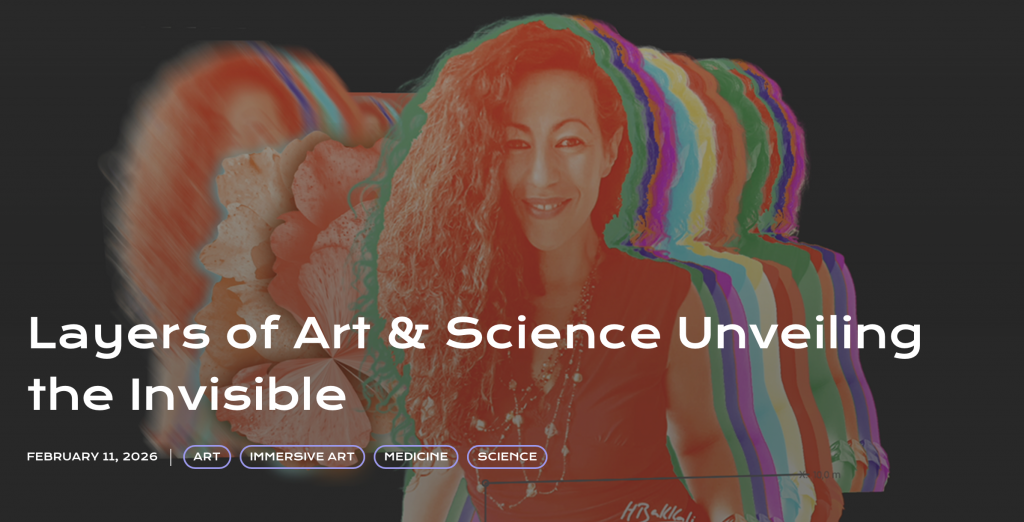
Both the layers of scientific communication and the layers of immersive art seek to capture attention, enhance learning, foster awareness, and encourage participation and reflection. In this context, immersive art strengthens the communication experience, enabling scientific knowledge to be sensory, experiential, and closely connected to human practice.MORE
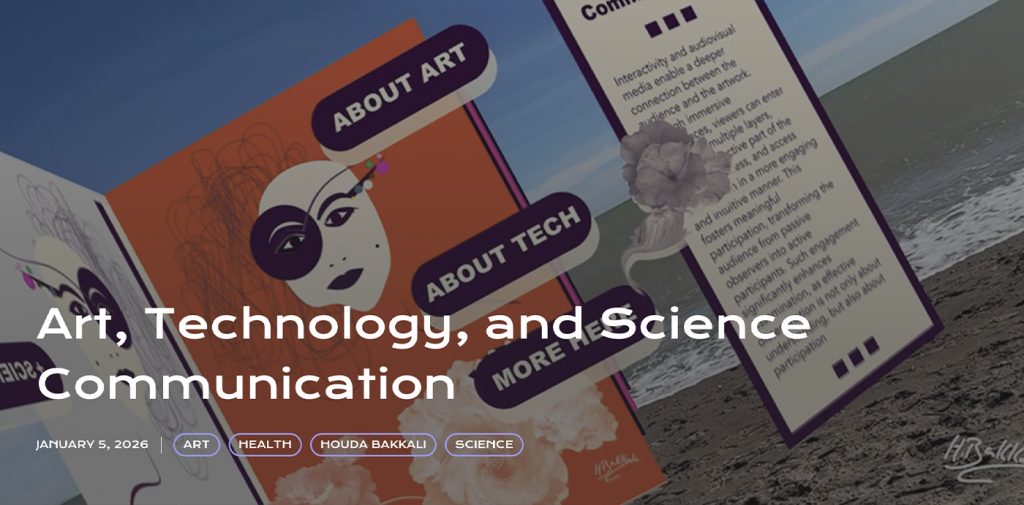
XR enable a deeper connection between the audience and the artwork. Through immersive experiences, viewers can enter the work’s multiple layers, become an active part of the creative process, and access information in a more engaging and intuitive manner. This fosters meaningful participation, transforming the audience from passive observers into active participants. MORE
Art for science requires us first to be able to translate scientific language into language that is understandable, and also to structure it visually across different formats and platforms without it losing its meaning, and so on at great length.
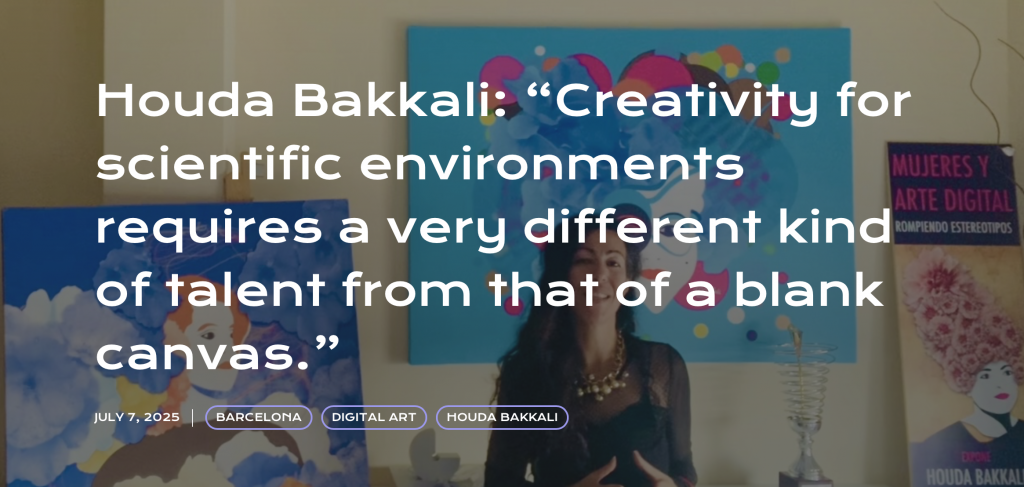
Creativity for scientific environments requires a very different kind of talent than that of the blank canvas. MORE