Houda Bakkali has an extensive and well-established backgroundindelivering masterclasses, specialized workshops and seminars focused on marketing and visual communication, as well as on the analysis of the impact of emerging technologies and creativity as essential tools in the fields of marketing,communication, entertainment, and education. Her approach combines rigorous theoretical foundations with strategic development, practical application, and guidance throughout the creative process. She designs and implements content from the initial conceptualization to the detailed execution, providing insight into the effective use and integration of cutting-edge technologies such as artificial intelligence, virtual and immersive environments, and the evolving ecosystems of Web3. Additionally, she has led theoretical and practical workshops in areas including edTech, digital and print editorial design, video creation, and the development of multimedia and interactive projects.
FROM CONCEPT TO EXECUTION
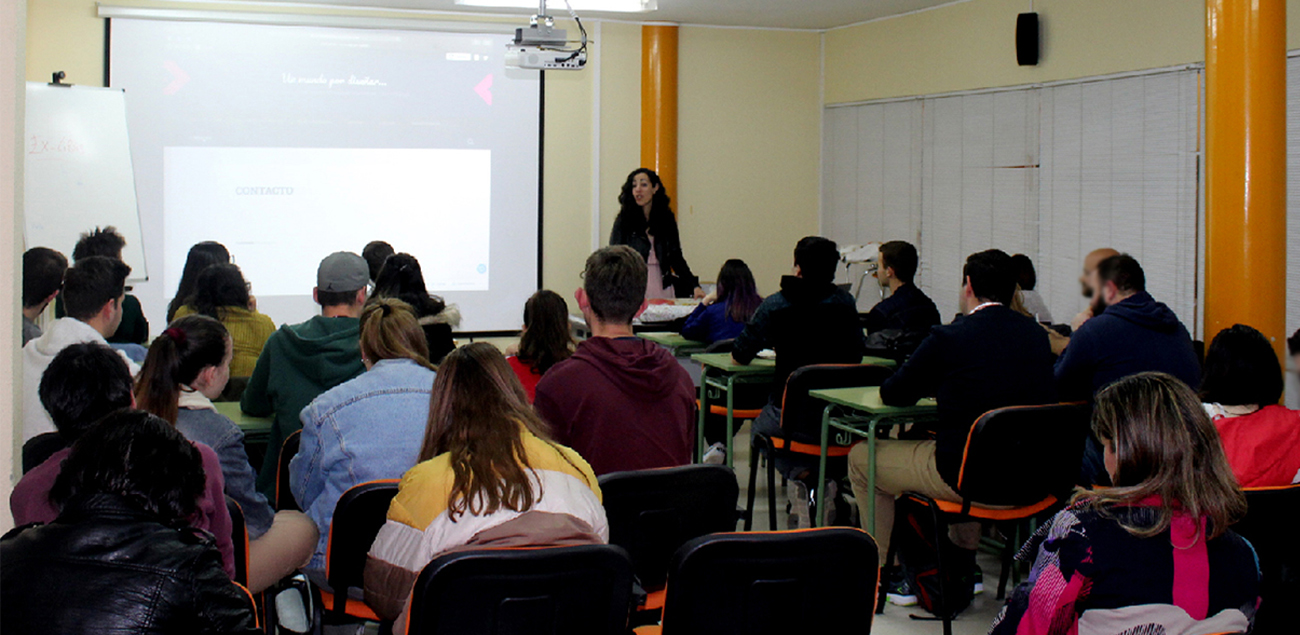
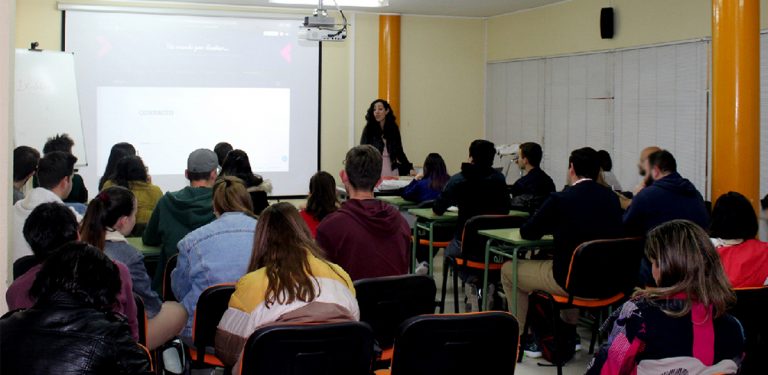
Bakkali’s work effortlessly bridges the realms of art and education. She frequently delivers lectures, masterclasses, and seminars for a wide range of institutions. Her contributions include presentations and workshops at the European Commission, the Alliance Française, Paradores-Universidad de Oviedo,CivicCenters of the Barcelona City Council, Provincial Council of Soriaor Santander Private Banking Work Café, among others.
Houda Bakkali’s lectures and workshops showcase how art, technology, and communication merge to create impactful content with unique creativity for sectors such as culture, healthcare, education, and tourism.MORE.
L' Alliance Française
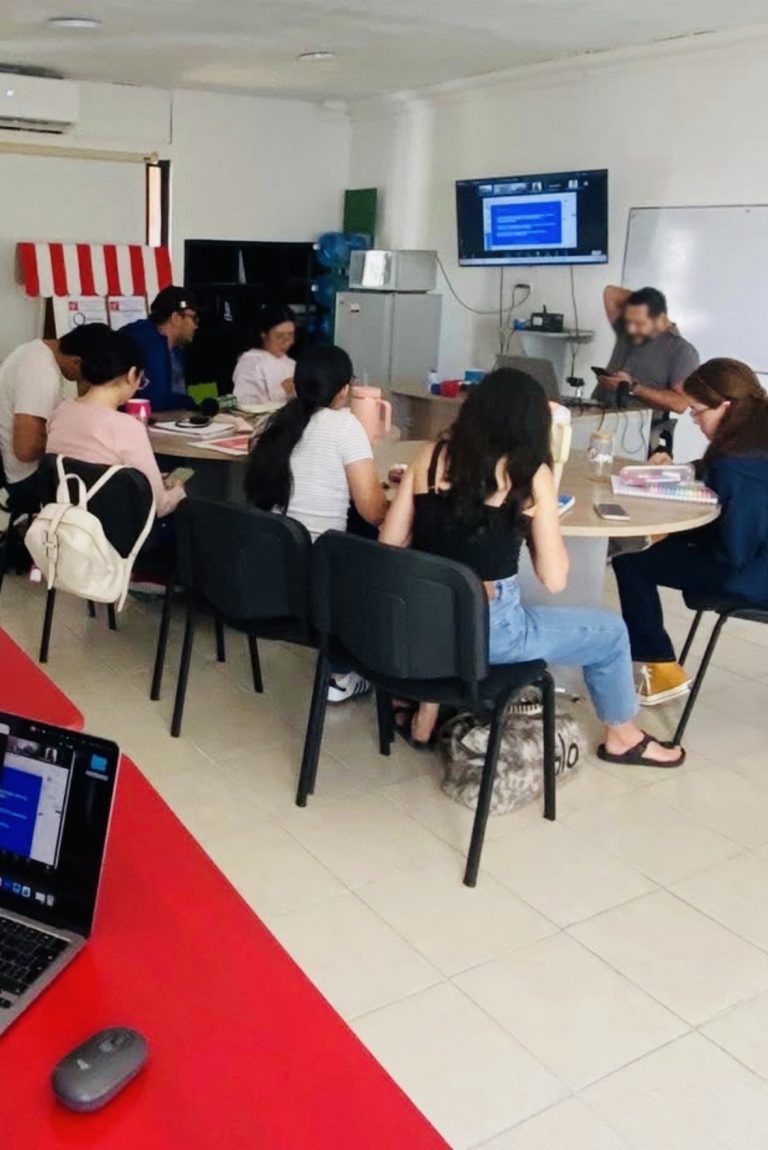
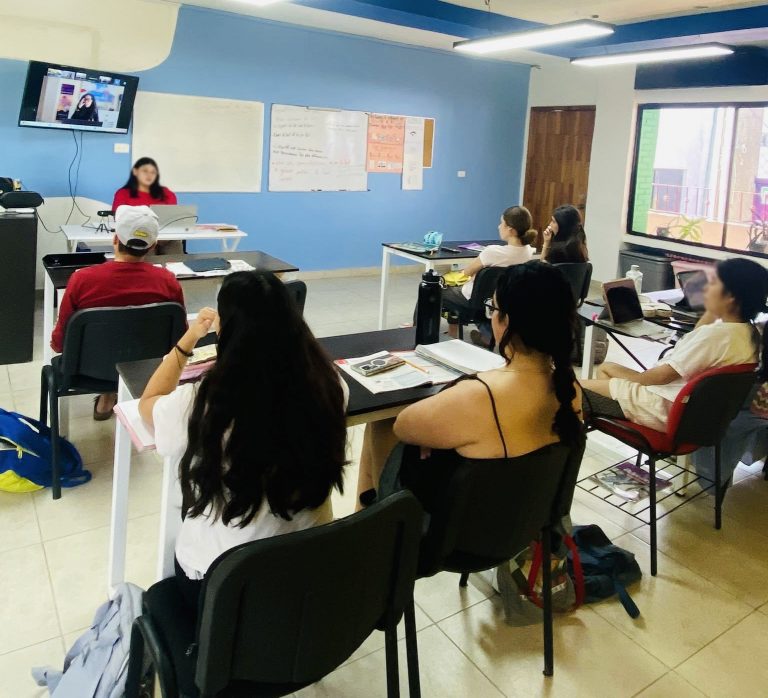
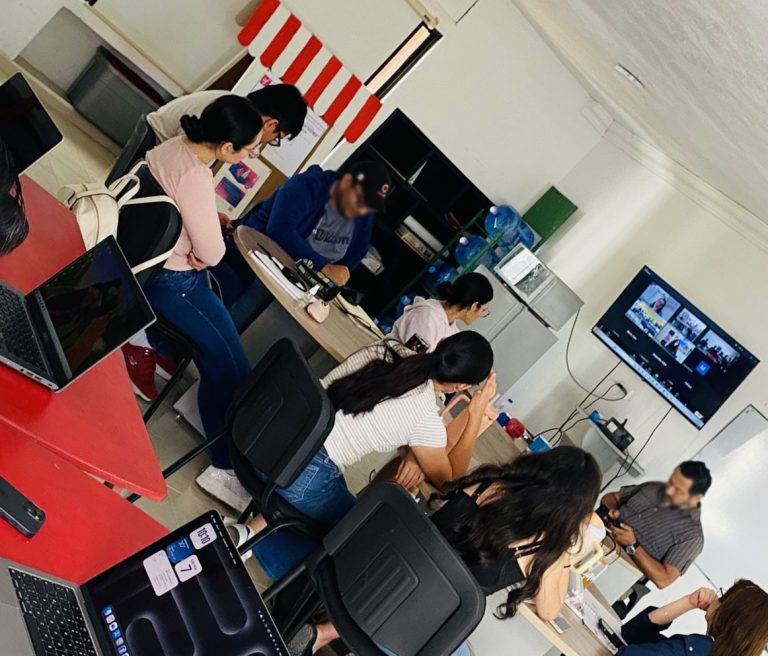
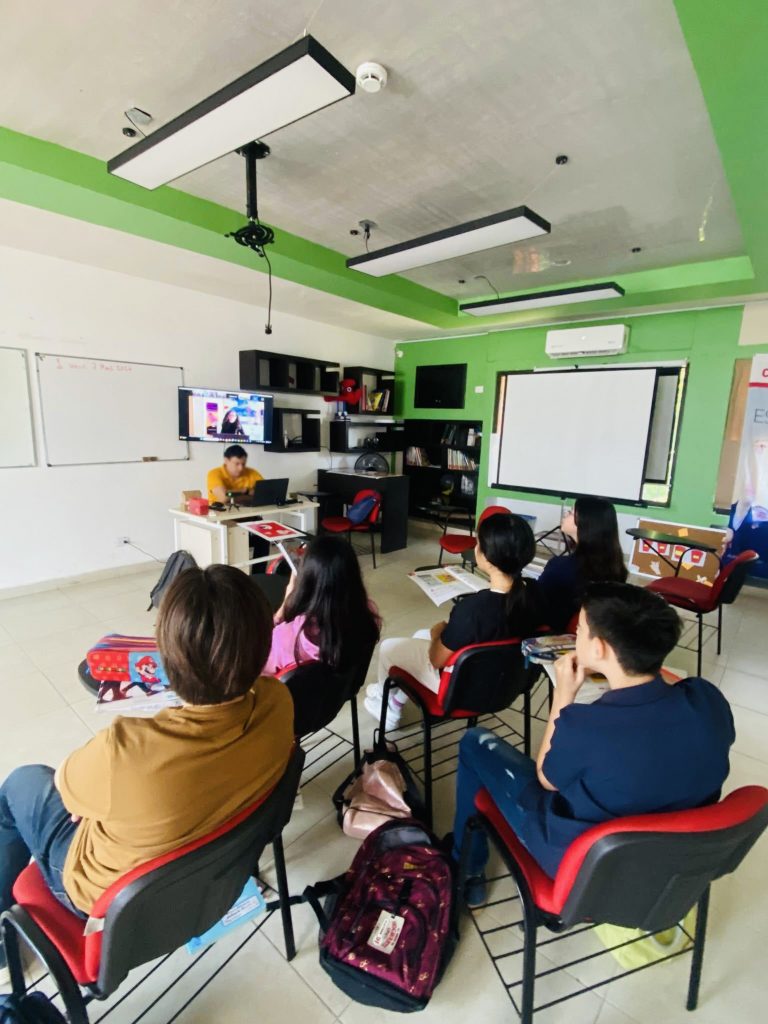
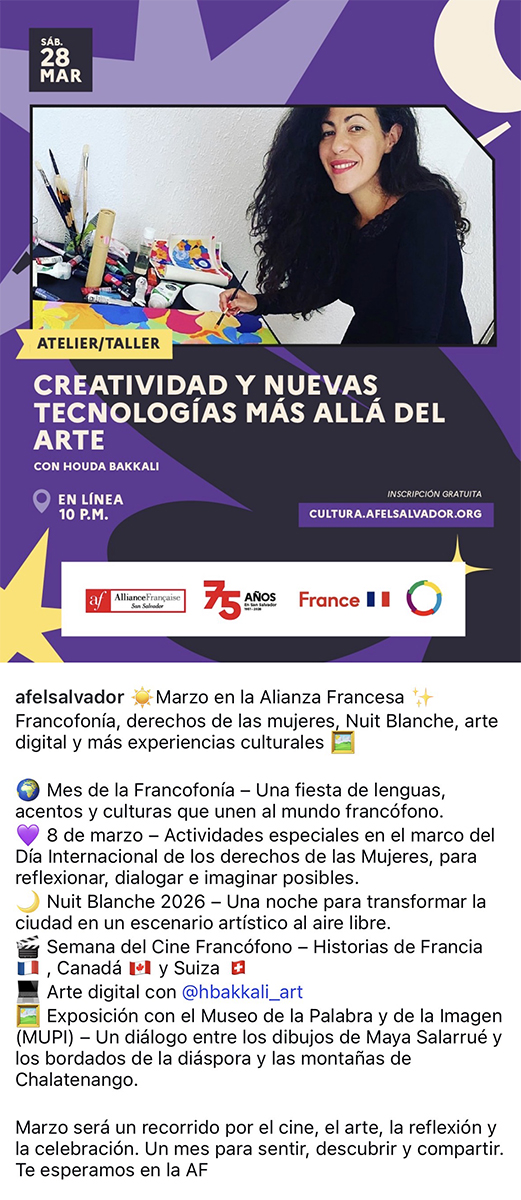
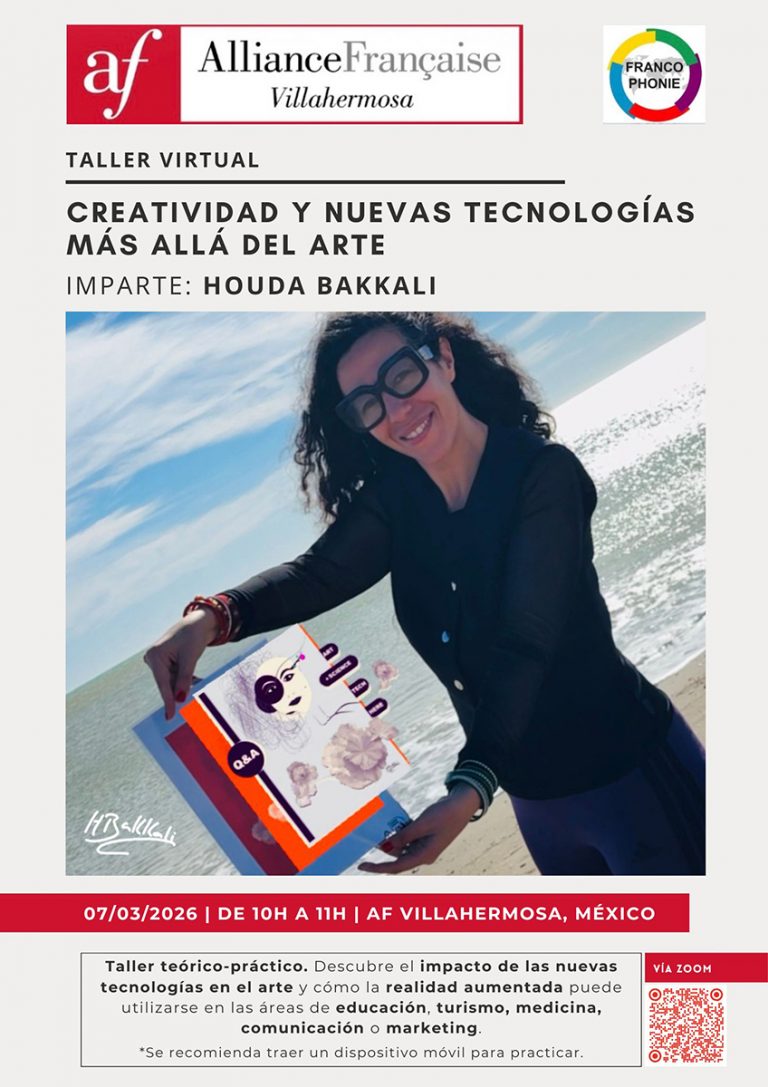
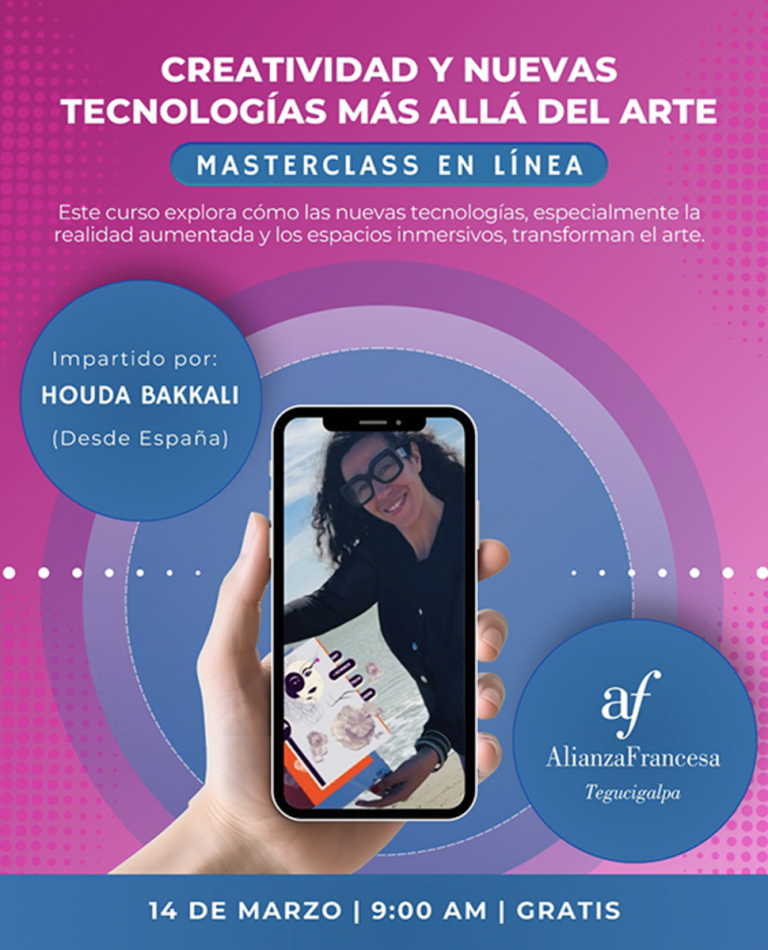
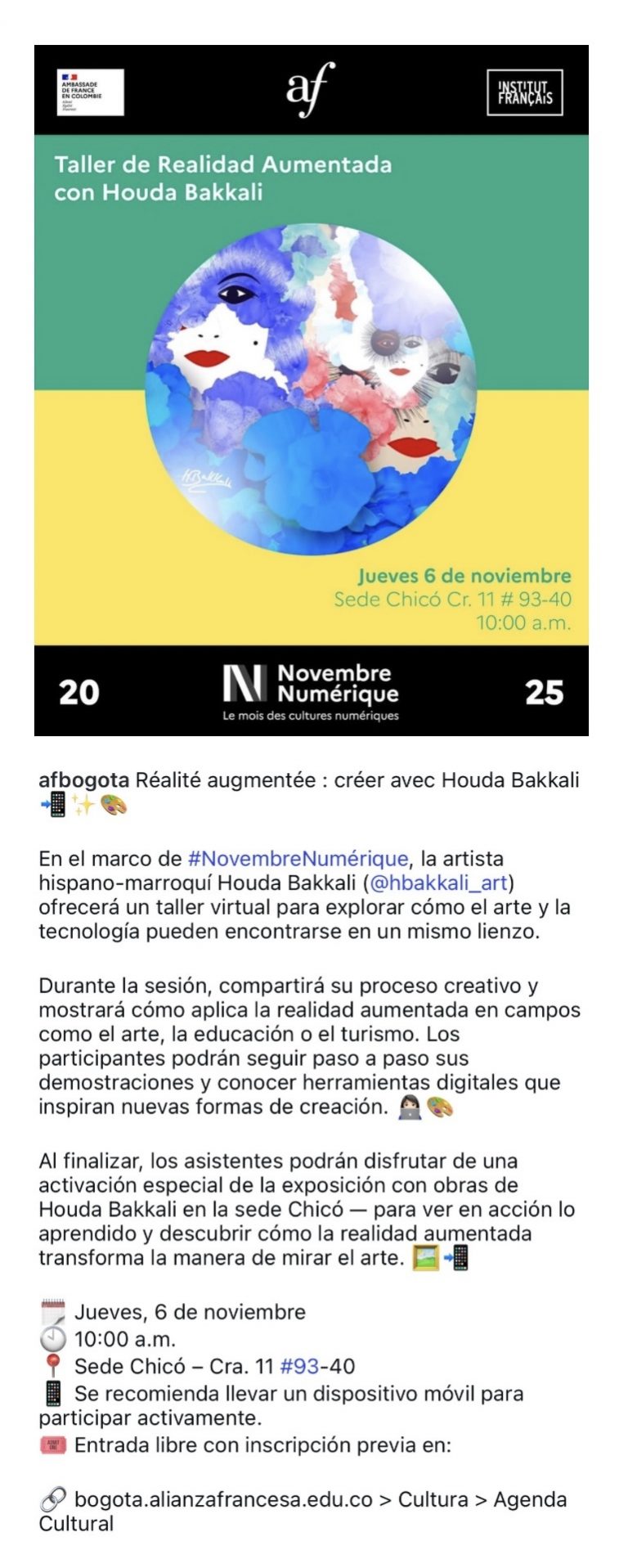
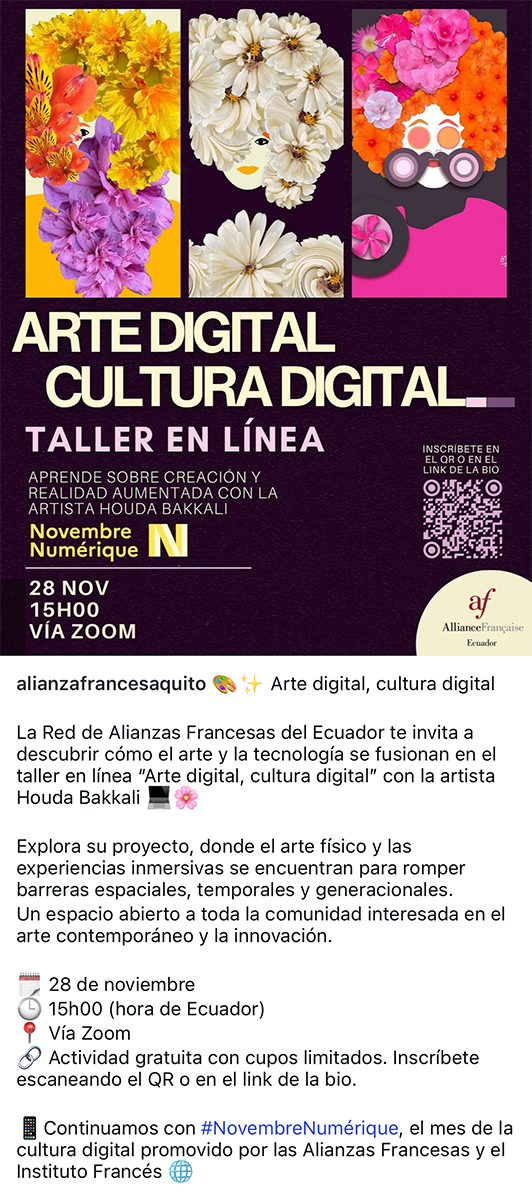
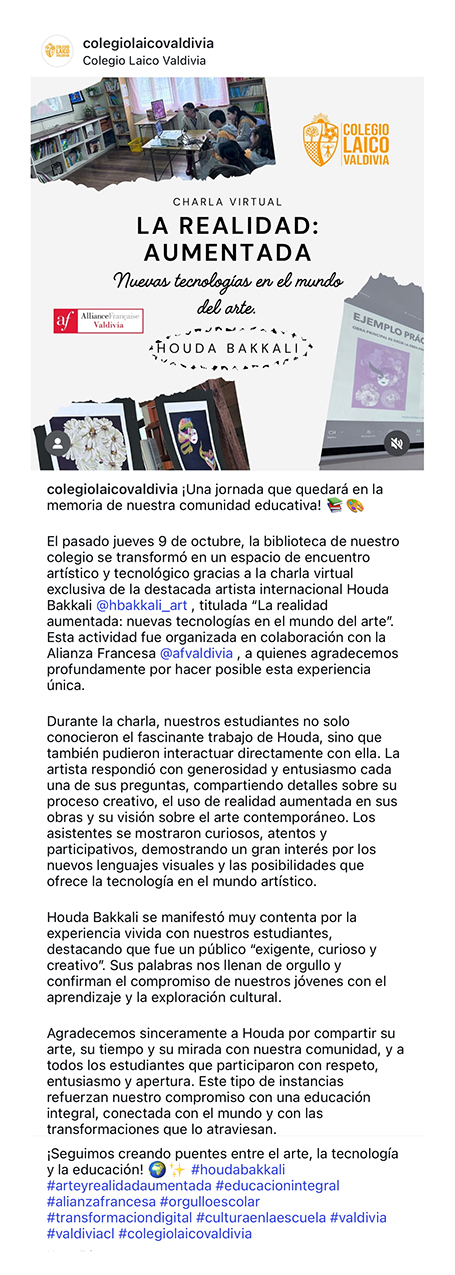
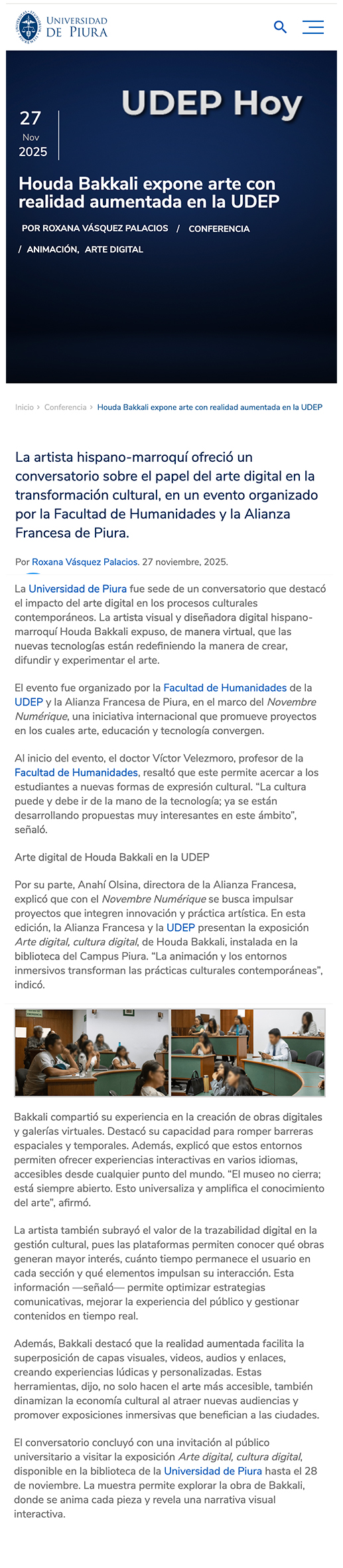
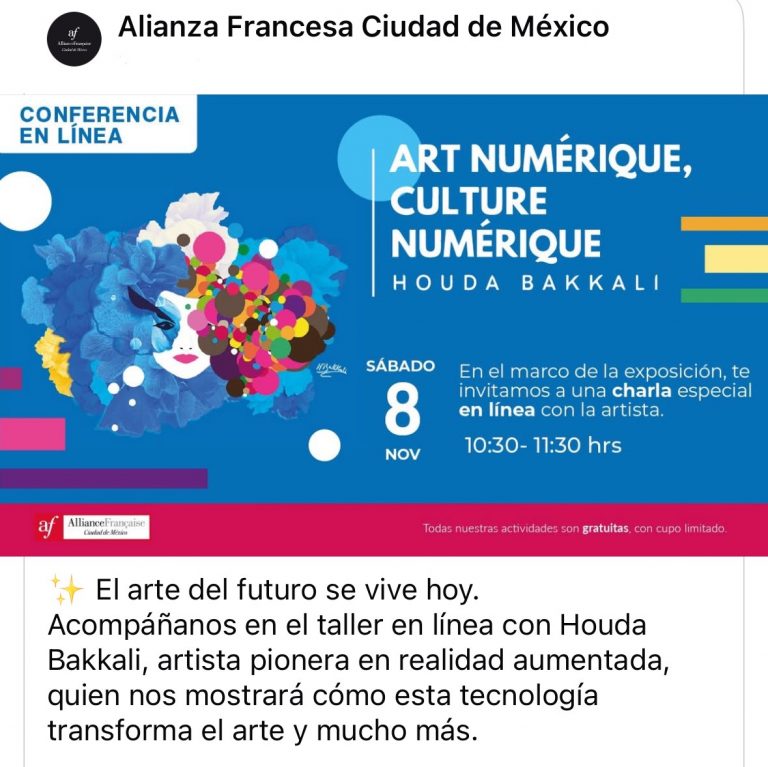
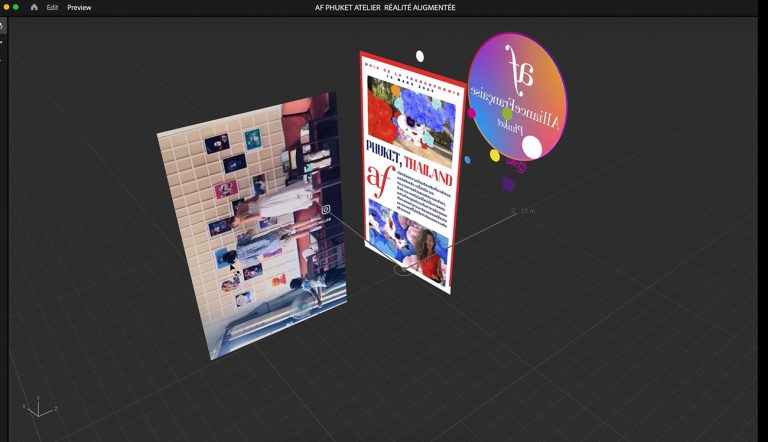
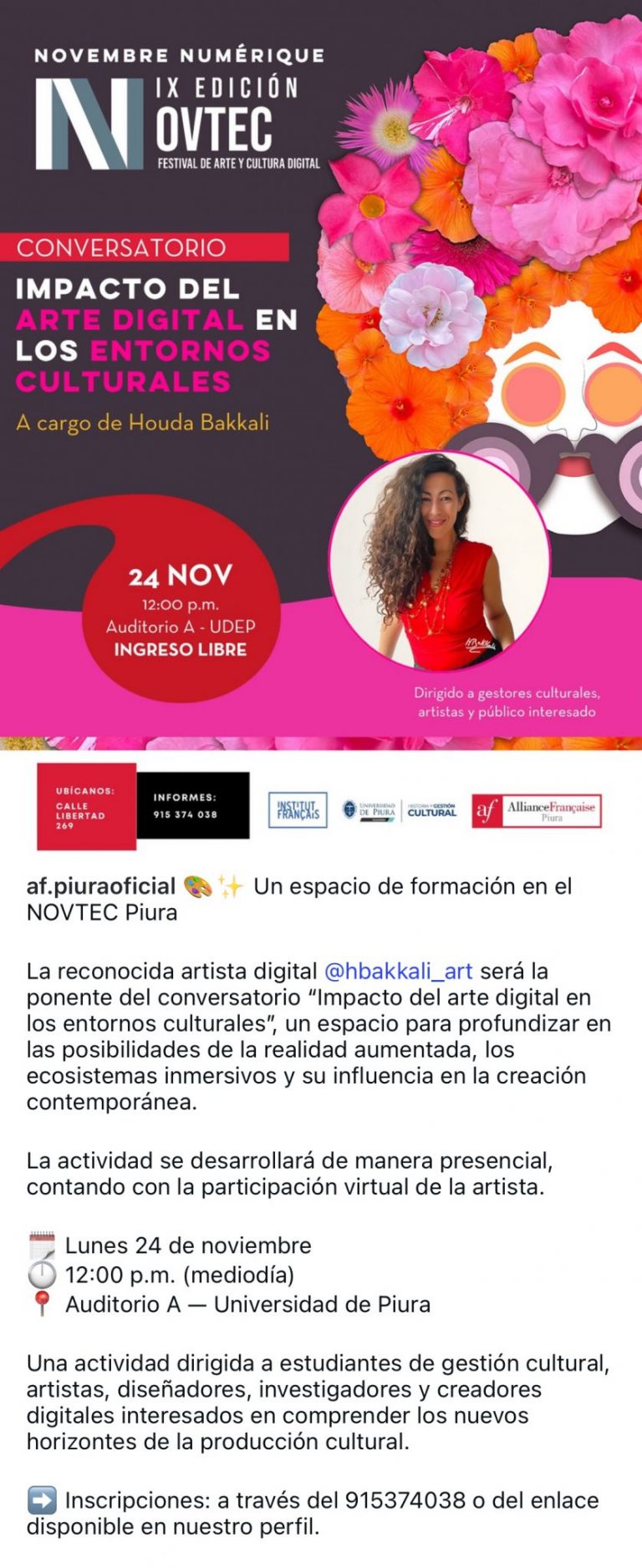
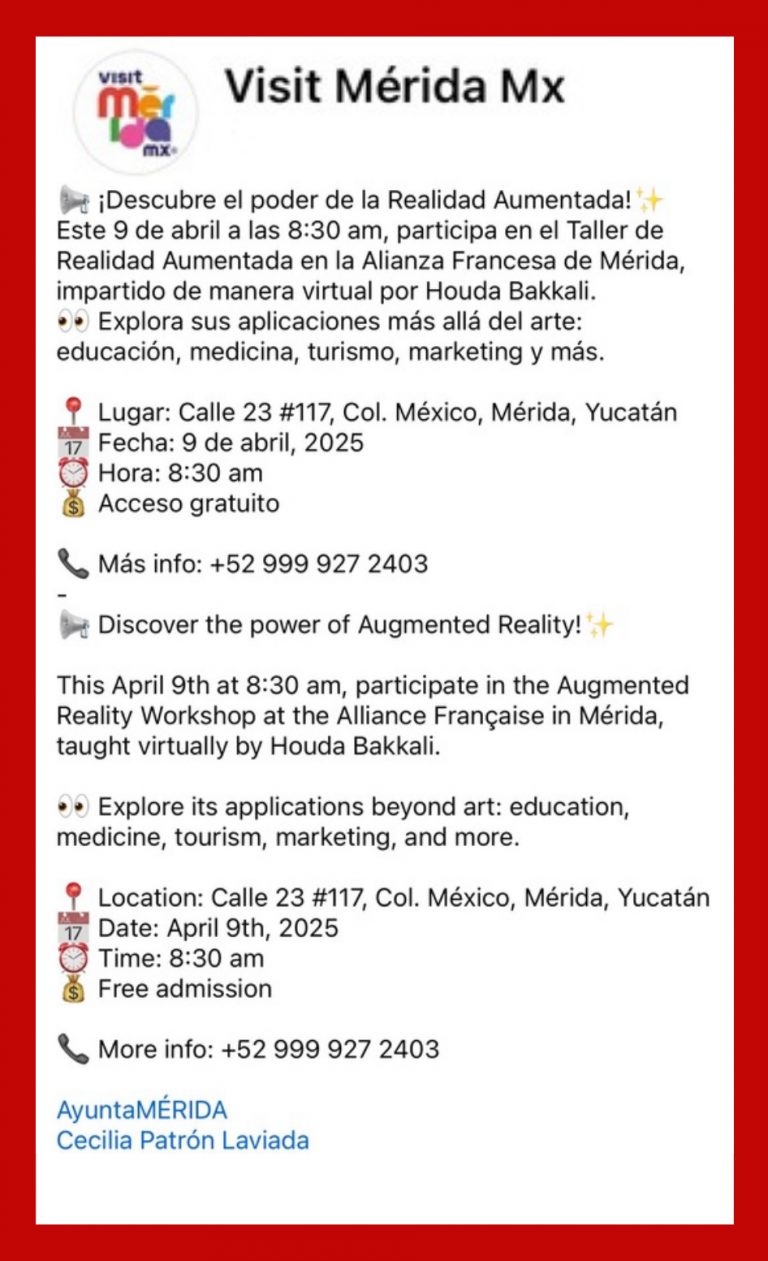
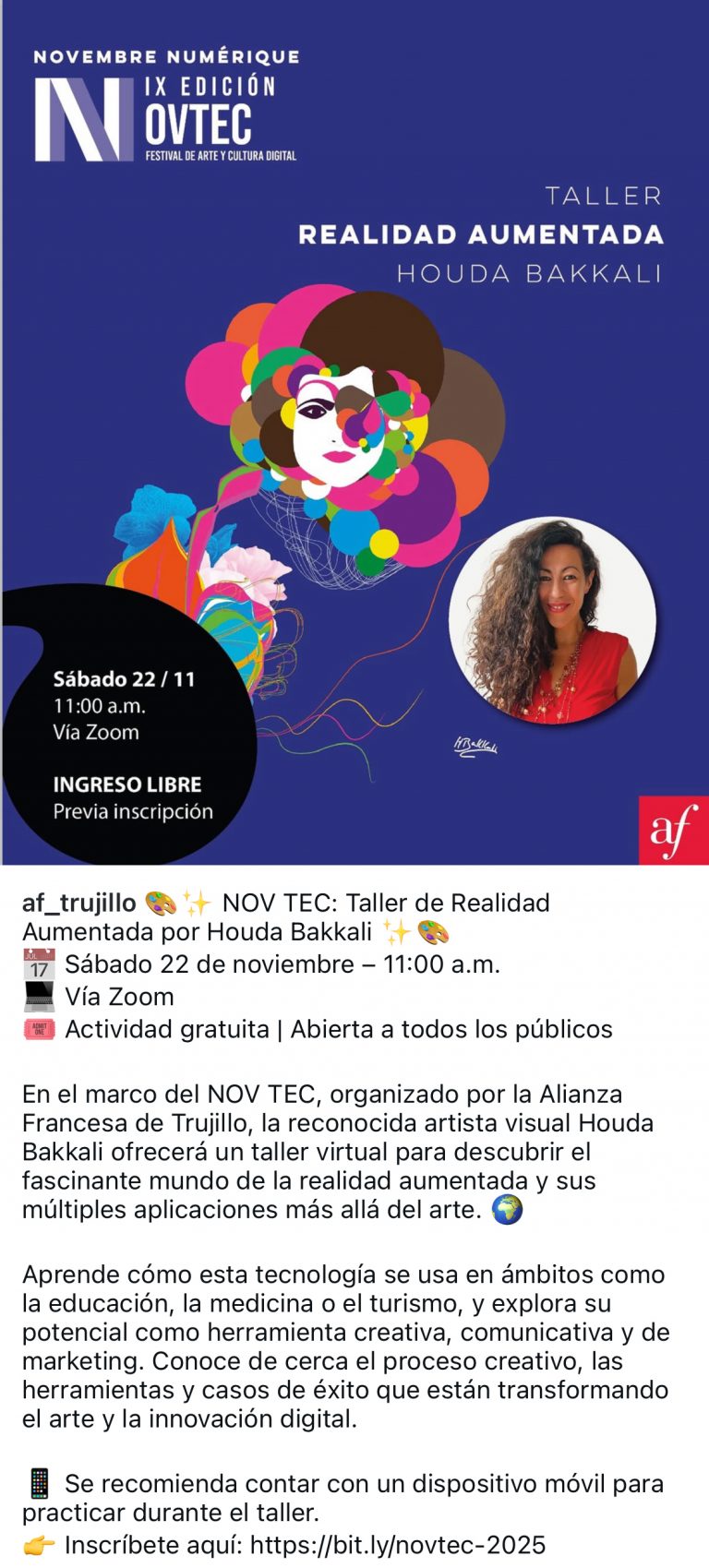
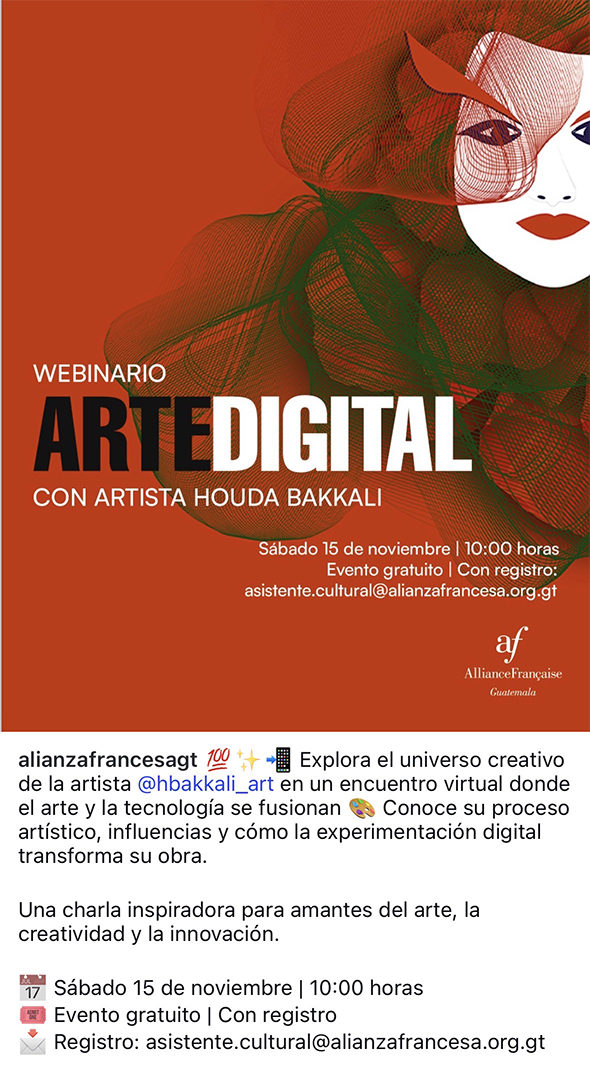
Through the network of the legendary Alliance Française, Houda Bakkali has carried out a wide range of educational and outreach activities, including workshops and masterclasses in countries and cities such as Loja, Quito, Guayaquil, Cuenca and Portoviejo (Ecuador), Mexico City (Mexico), Bogotá (Colombia), Phuket (Thailand), Trujillo (Peru), Piura (Perú) Valdivia (Chile) and Mérida (Mexico), as well as Q&A sessions in Auckland, New Zealand.
Particularly noteworthy is her lecture at the European Commission during the Madrid Book Fair (Spain), as well as her work at the intersection of art and education through exhibitions held across the Alliance Française in 36 cities and 22 countries. These initiatives promote immersive educational experiences through multimedia and interactive content, addressing the impact, challenges and opportunities of new technologies applied to art.